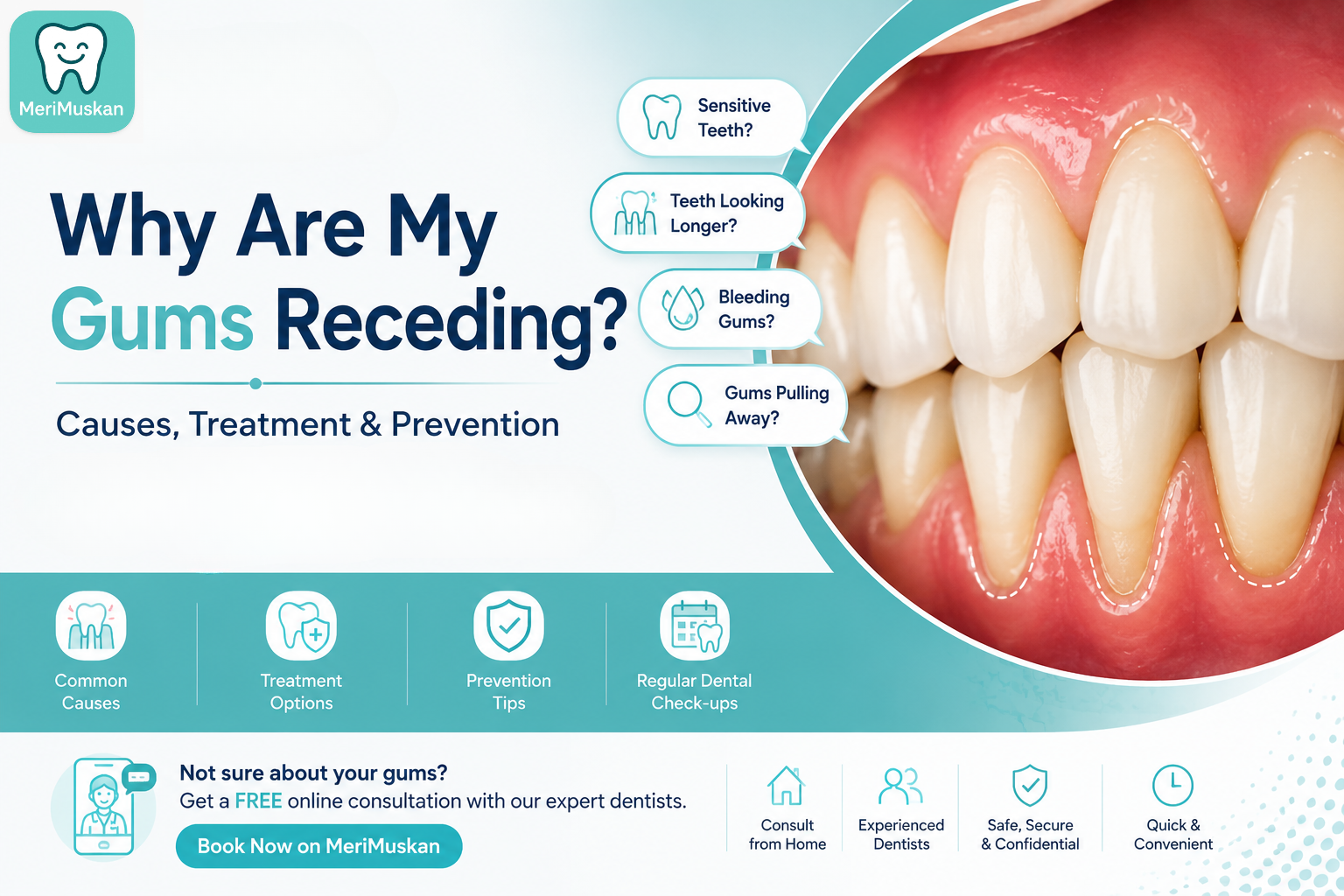
You brush your teeth one morning and pause.
"Have my teeth always looked this long?"
A few days later, you notice something else.
Cold water suddenly makes one tooth sting.
Brushing near the gumline feels uncomfortable.
When you look closely in the mirror, it seems like your gums are slowly moving away from your teeth.
If this sounds familiar, you're not alone.
Gum recession is one of the most common dental problems adult’s experiences, and many people don't even realize it's happening until it has already progressed.
Let's understand why gums recede, what it means for your oral health, and what you can do about it.
What are receding gums?
Healthy gums fit snugly around your teeth, protecting the roots underneath.
When gums begin to pull away from the teeth, they expose more of the tooth or even the root surface beneath.
This is called gum recession.
Unlike a cut on your skin, gums do not grow back on their own once they've receded.
How do you know if your gums are receding?
Many people don't notice gum recession until they start experiencing symptoms.
Common signs include:
-Teeth appearing longer than before
-Tooth sensitivity to hot, cold, or sweet foods
-Visible tooth roots
-A notch or groove near the gumline
-Food getting trapped more easily
-Bleeding gums while brushing
If you've noticed one or more of these signs, it's worth getting your gums checked by a dentist.
Why are my gums receding?
There isn't just one cause.
Often, it's a combination of several factors.
1. Gum Disease
Your mouth naturally contains bacteria.
When plaque isn't removed through proper brushing and flossing, it hardens into tartar.
Over time, bacteria irritate the gums, leading to inflammation known as gingivitis.
If left untreated, gingivitis can progress to periodontitis, where the gums and supporting bone begin to break down.
As this happens, the gums gradually pull away from the teeth.
And this is one of the leading causes of gum recession worldwide.
2. Brushing too hard
Many people believe brushing harder cleans better.
Unfortunately, the opposite is true.
Using excessive force or a hard-bristled toothbrush can slowly wear away gum tissue over time.
Think of it like scrubbing delicate fabric with a wire brush.
Gentle brushing is far more effective.
3. Teeth grinding (bruxism)
Do you wake up with jaw pain or headaches?
You may be grinding your teeth during sleep.
Constant pressure places stress on both teeth and gums, contributing to gum recession in some people.
4. Crooked or crowded teeth
When teeth aren't properly aligned, biting forces aren't distributed evenly.
Some teeth experience more pressure than others, increasing the risk of gum recession over time.
This is one reason dentists sometimes recommend orthodontic treatment, not just for appearance, but for long-term oral health.
6. Genetics
Sometimes, you can do everything right and still experience gum recession.
Some people naturally have thinner gum tissue, making them more prone to recession.
While genetics can't be changed, early monitoring can help prevent further damage.
You might think,
"It's just my gums moving a little."
But gum recession can lead to much bigger problems.
If ignored, it may cause:
-Increased tooth sensitivity
-Tooth decay on exposed roots
-Persistent bad breath
-Gum disease
-Bone loss
-Loose teeth
-Tooth loss in severe cases
The earlier you address it, the better your chances of protecting your natural teeth.
Can receding gums grow back?
This is one of the most searched questions online.
Unfortunately, receded gums do not naturally grow back.
However, treatment can:
-Stop the recession from getting worse
-Reduce sensitivity
-Improve gum health
-Protect exposed roots
-Restore gums in selected cases through gum grafting procedures
The right treatment depends on what's causing the recession.
How is gum recession treated?
Your dentist will first identify the underlying cause.
Treatment may include:
1. Professional scaling and cleaning
2. Improving your brushing technique.
3. Treating teeth grinding
4. Orthodontic treatment
5. Gum grafting
Can you prevent gum recession?
In many cases, yes.
Here are a few habits that make a big difference:
✔ Brush gently twice a day with a soft-bristled toothbrush.
✔ Floss every day.
✔ Visit your dentist for regular check-ups and professional cleanings.
✔ Wear a night guard if you grind your teeth.
✔ Avoid smoking and tobacco products.
✔ Treat gum disease early.
✔ Don't ignore bleeding gums, they're often the first warning sign.
A quick self-check
Answer these questions honestly:
Do your teeth look longer than they used to?
Do your gums bleed when brushing?
Do you experience tooth sensitivity?
Are your teeth crowded or overlapping?
Have you noticed your gums pulling away from your teeth?
If you answered yes to any of these, it may be time to have your gums evaluated.
Not sure whether your gums are receding?
You don't have to figure it out alone.
At MeriMuskan, you can receive a FREE online dental consultation with experienced dentists from the comfort of your home.
Simply share your concerns and dental photos, and our dentists can help you understand your concern.