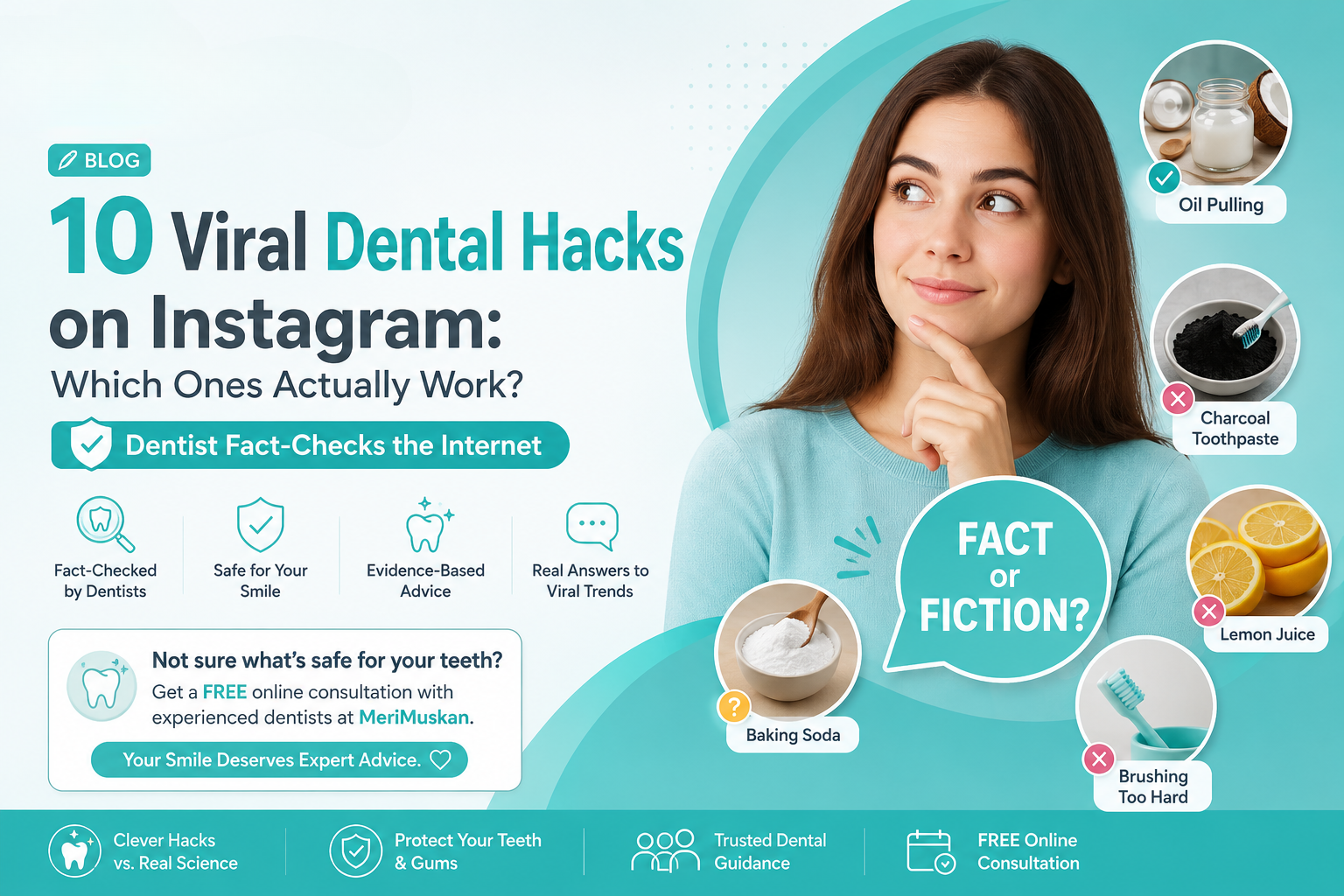
Have you ever watched a dental hack on Instagram and thought...
"Should I try this?"
One creator says rubbing lemon on your teeth makes them sparkle.
Another swears by charcoal toothpaste.
Someone else claims oil pulling cured their bad breath.
Within minutes, thousands of people are saving, sharing, and trying these "miracle" dental hacks.
But here's the question:
Do these viral dental trends actually work… or could they damage your teeth?
Let's separate facts from fiction.
1. Oil pulling for bad breath
You've probably seen influencers swishing coconut oil for 15–20 minutes every morning, claiming it detoxifies the mouth, removes plaque, and even whitens teeth.
But does it really work?
The answer is partly yes.
Oil pulling may help reduce some bacteria in the mouth and temporarily improve bad breath. Some studies also suggest it can contribute to better oral hygiene when used alongside regular brushing.
However, there's one important thing to remember:
Oil pulling cannot replace brushing, flossing, or professional dental care. It won't remove hardened tartar, treat cavities, or cure gum disease.
2. Rubbing lemon on your teeth to whiten them
This is one of the most dangerous dental hacks on social media.
Lemon is highly acidic.
Every time you rub lemon directly onto your teeth, the acid slowly dissolves your enamel, the protective outer layer of your teeth.
At first, your teeth may look brighter because some surface stains have been removed.
But underneath, your enamel is becoming thinner.
Over time, this can lead to:
Tooth sensitivity
Yellow-looking teeth
Increased risk of cavities
Permanent enamel damage
Once enamel is lost, it does not grow back.
3. Charcoal toothpaste
Charcoal toothpaste has become incredibly popular thanks to Instagram and TikTok.
It certainly looks satisfying to use.
But is it actually good for your teeth?
Charcoal can remove some surface stains, making teeth appear cleaner.
The problem is that many charcoal toothpastes are highly abrasive.
Imagine sanding a wooden table.
At first, it looks cleaner.
But if you keep sanding...
Eventually there's nothing left.
The same thing can happen to your enamel.
Used too often, charcoal toothpaste may wear away the protective surface of your teeth, making them more sensitive and sometimes even more yellow.
4. Baking soda makes teeth instantly white
This hack has been around for decades.
Unlike many viral trends, there is actually some truth behind it.
Baking soda is mildly abrasive and can help remove stains caused by tea, coffee, or smoking.
But here's the catch...
It only removes surface stains.
If your teeth are naturally darker or stained from within, baking soda won't magically make them Hollywood white.
5. Brushing harder cleans better
Let's settle this myth once and for all.
Brushing harder does not clean your teeth better.
In fact, brushing too aggressively can slowly wear away enamel and push your gums away from your teeth, leading to gum recession and tooth sensitivity.
Your toothbrush isn't supposed to scrub your teeth like you're cleaning a dirty pan.
Gentle brushing with a soft-bristled toothbrush is far more effective.
6. Salt can cure a toothache
Grandparents have recommended warm salt-water rinses for generations.
And they aren't completely wrong.
Salt water can soothe irritated gums and temporarily reduce inflammation.
But here's what it can't do.
It can't fix:
Cavities
Tooth infections
Cracked teeth
Dental abscesses
If your tooth hurts for more than a day or two, it's time to see a dentist, not another viral video.
7. Tongue scraping gets rid of bad breath
This is one viral dental trend that's actually worth keeping.
Your tongue collects bacteria, food debris, and dead cells throughout the day.
Using a tongue scraper regularly can reduce bad breath and leave your mouth feeling much fresher.
Just remember:
Tongue scraping works best alongside brushing and flossing, not instead of them.
The next time you see someone claiming they've discovered the "secret" to perfect teeth, ask yourself one simple question:
Is this advice coming from scientific evidence... or from someone chasing views?
If you've seen a viral dental hack and you're wondering whether it's safe for your teeth, don't rely on the comments section.
At MeriMuskan, you can book a FREE online dental consultation with experienced dentists from the comfort of your home.
Simply share your concerns, ask your questions, or upload photos of your teeth. We'll help you understand which dental advice is worth following, and which trends are better left on Instagram.