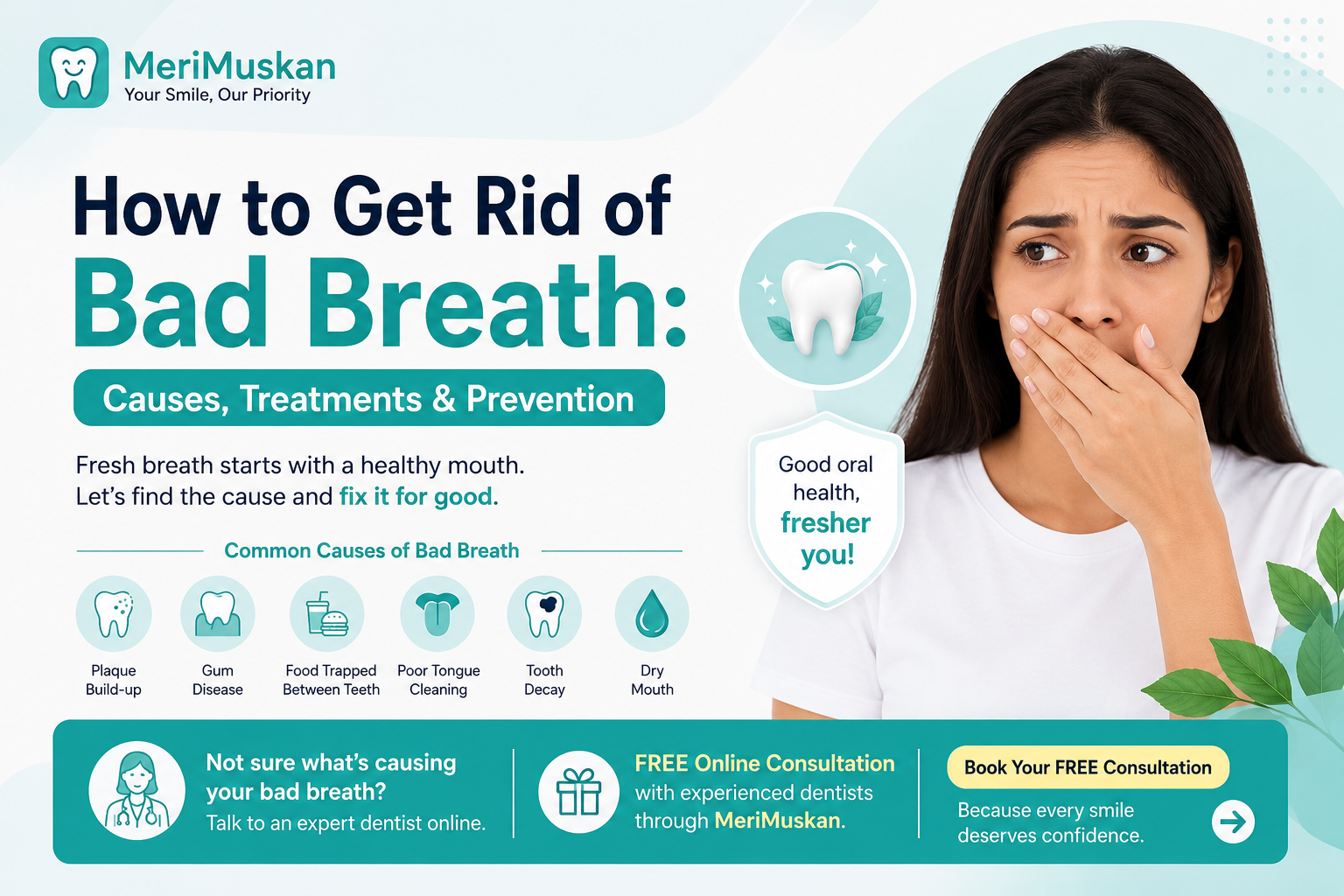
Bad breath can be embarrassing, but it's usually treatable once you know what's causing it.
Have you ever done this?
You cup your hand over your mouth, breathe into it, and secretly check your breath.
Or maybe someone offered you gum after a conversation, and you suddenly wondered...
"Does my breath smell?"
If so, you're not alone.
Bad breath, also known as halitosis, affects millions of people. While it's often blamed on the foods we eat, persistent bad breath is usually a sign that something else is going on inside your mouth.
Let's explore why bad breath happens, how you can treat it, and when it's time to seek professional advice.
1. Plaque build-up
Every day, bacteria naturally build up on your teeth.
If plaque isn't removed through regular brushing and flossing, these bacteria release unpleasant-smelling compounds.
The longer plaque stays on your teeth, the greater the chance of bad breath and gum disease.
2. Gum disease
One of the most common causes of persistent bad breath is gum disease.
When bacteria collect beneath the gums, they cause inflammation and infection.
Common signs include:
Bleeding gums
Swollen gums
Bad breath that doesn't improve after brushing
If left untreated, gum disease can affect not only your breath but also your overall oral health.
3. Food trapped between teeth
Even after brushing, tiny food particles can remain stuck between your teeth.
As these particles break down, bacteria feed on them and produce unpleasant odors.
This is why flossing is just as important as brushing.
4. Poor tongue cleaning
Did you know your tongue can hold millions of bacteria?
Its rough surface easily traps food debris and bacteria, making it one of the biggest contributors to bad breath.
Cleaning your tongue every day can make a noticeable difference.
5. Tooth decay
A cavity isn't just a hole in your tooth.
As decay progresses, bacteria multiply inside the tooth, often leading to unpleasant odors and bad breath.
Sometimes, persistent bad breath is one of the earliest signs that something isn't right.
6. Dry mouth
Saliva is your mouth's natural cleaning system.
It helps wash away food particles and bacteria throughout the day.
When your mouth becomes dry, whether due to dehydration, certain medications, or mouth breathing, bacteria multiply more easily, increasing the risk of bad breath.
How can you get rid of bad breath?
Most cases of bad breath can be improved with simple daily habits.
Brush your teeth twice a day
Floss every day
Clean your tongue regularly
Stay well hydrated
Limit sugary snacks and drinks
Visit your dentist for regular check-ups and professional cleaning
When should you see a dentist?
Ask yourself:
Does your bad breath return soon after brushing?
Have friends or family mentioned it?
Do your gums bleed when brushing?
Do you have tooth pain or sensitivity?
Have you noticed a persistent bad taste in your mouth?
If you answered yes to any of these questions, it's time to have your oral health checked.
Bad breath isn't something you should feel embarrassed about.
It's often your mouth's way of telling you that something needs attention.
The earlier the cause is identified, the easier it usually is to treat.
Whether it's plaque build-up, gum disease, tooth decay, or simply improving your oral hygiene routine, taking action today can help protect your smile tomorrow.
Not sure what's causing your bad breath?
You don't have to figure it out alone.
MeriMuskan connects you with experienced dentists through FREE online dental consultations.
From the comfort of your home, you can discuss your symptoms, receive professional guidance, and understand whether you need further treatment all without the hassle of visiting a clinic first.