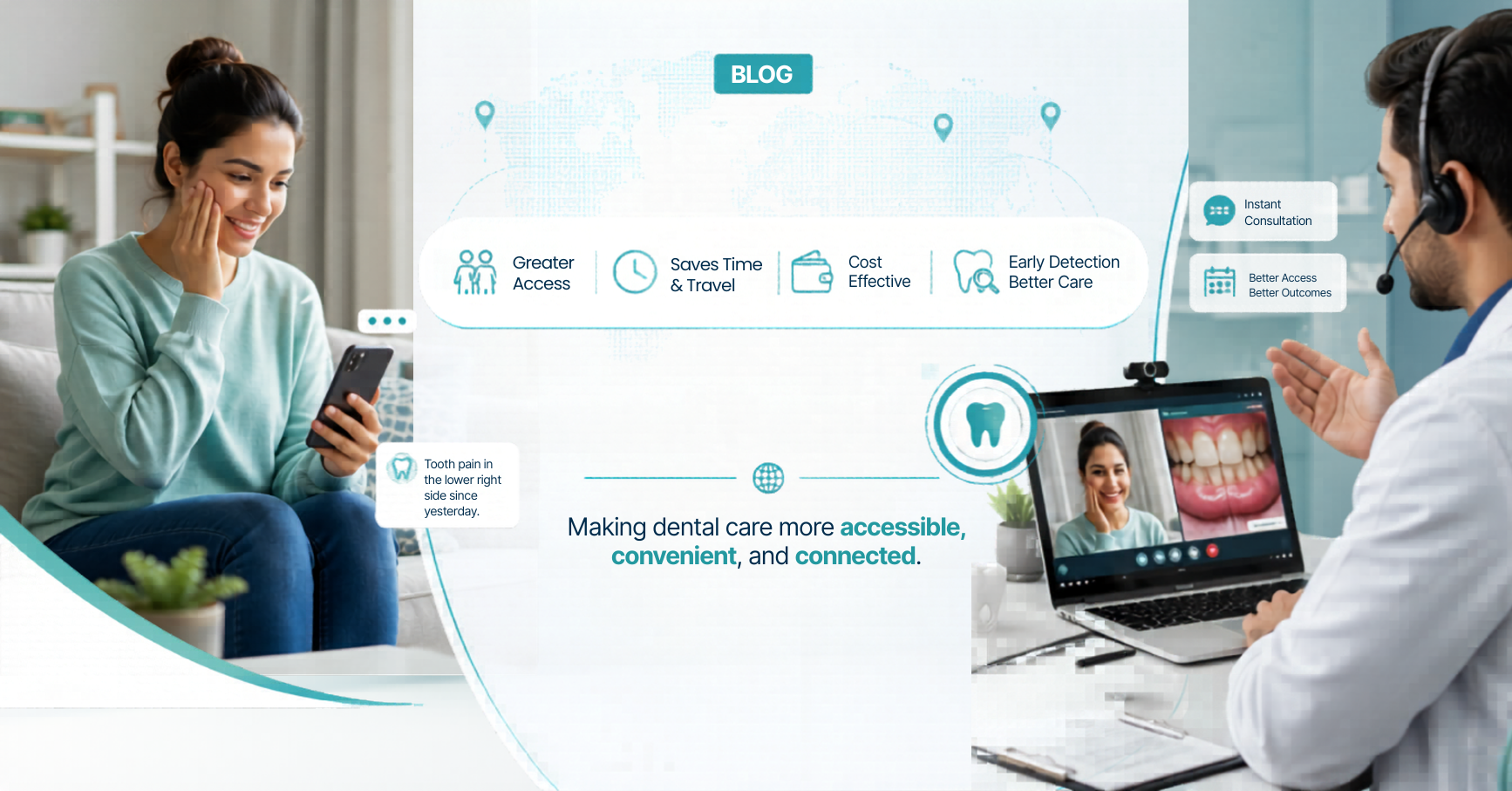
When was the last time you went to the dentist?
For a lot of people, the answer is a bit difficult.
It has been too long.
Maybe the clinic was too far.
Maybe the appointment felt like too much effort.
Maybe the cost put them off.
This problem is not limited to Pakistan or any other developing country. It is a global one. Dental care has always had an access problem and for decades there was not a real solution to it.
Well, now, teledentistry might just be that answer.
What exactly is teledentistry?
Teledentistry is dentistry delivered through technology and sometimes even Artificial Intelligence. A patient shares photographs of their teeth, describes their symptoms, and connects with a dentist remotely through a video call, chat, or an app. The dentist reviews the case, provides a clinical evaluation, and either manages it remotely or refers the patient to a clinic for in-person care.
It sounds straightforward, right?
Because it is.
And that ease is exactly what makes it powerful!
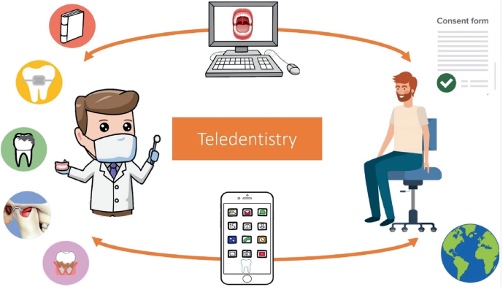
Why is it gaining traction globally now?
In recent years, a lot of developments have happened in the tech sector, and the world is adapting to it more quickly than ever. Smartphone cameras got good enough to capture high-quality images. Internet connectivity expanded into areas that previously had none. While the world was speedily advancing, COVID-19 arrived overnight and the world had no choice but to figure out how to deliver healthcare with less in-person contact, less waiting, and amid lockdowns.
Teledentistry was not invented during the pandemic, but the pandemic brought it into action. Patients who could not see a dentist in person were being triaged, advised, and managed remotely. Unnecessary emergency visits dropped. Dentists were able to prioritize patients who needed in-person visits.
After the pandemic, many clinics and patients simply did not go back to the old way.
What problems does it actually solve?
The most obvious one is access. In rural areas getting to the dentist can mean hours of travel. For elderly patients, for working parents, for people without easy access to transport, it is not easy to visit a dentist.
Teledentistry removes this barrier. Instead of making a patient travel for a ten-minute consultation, that conversation happens wherever they are.
Cost is another one. Not every dental concern needs a full clinical appointment. A lot of queries can be answered remotely. That saves the patient time and money. This also saves the clinic time, lessens the patient burden, and in some cases, even makes the workflow more efficient.
Early detection is perhaps the most underappreciated benefit. When a patient can share a photograph of their dental problem and get a professional opinion the same day, problems get caught earlier. This leads to treatment that is less invasive, less expensive, and less painful.
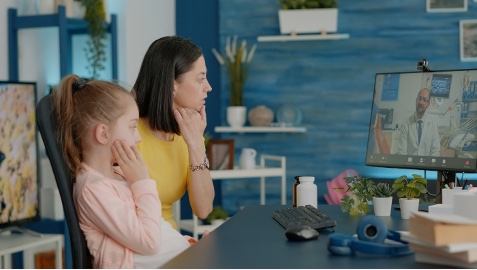
What are the limitations?
Teledentistry is not a replacement for the dental chair. It can never be. You cannot clean teeth remotely. You cannot take a proper radiograph through a smartphone camera. Dental procedures require manual skills, equipment, and a clinical setting.
What teledentistry does well is triage. Figuring out who needs urgent care, who can be managed conservatively, and who needs to be seen but not immediately. The other limitation is that it depends on the patient being able to share good quality images and describe their symptoms clearly. For older patients or those who are less comfortable with technology, it can be a barrier.
So, is this the future of dentistry?
The future of dentistry is probably where teledentistry handles the front end of care and the clinic handles the clinical work. Where a patient's first contact is digital and their ongoing care is tracked through technology. Dental professionals should start engaging with teledentistry to make dentistry more accessible and efficient.