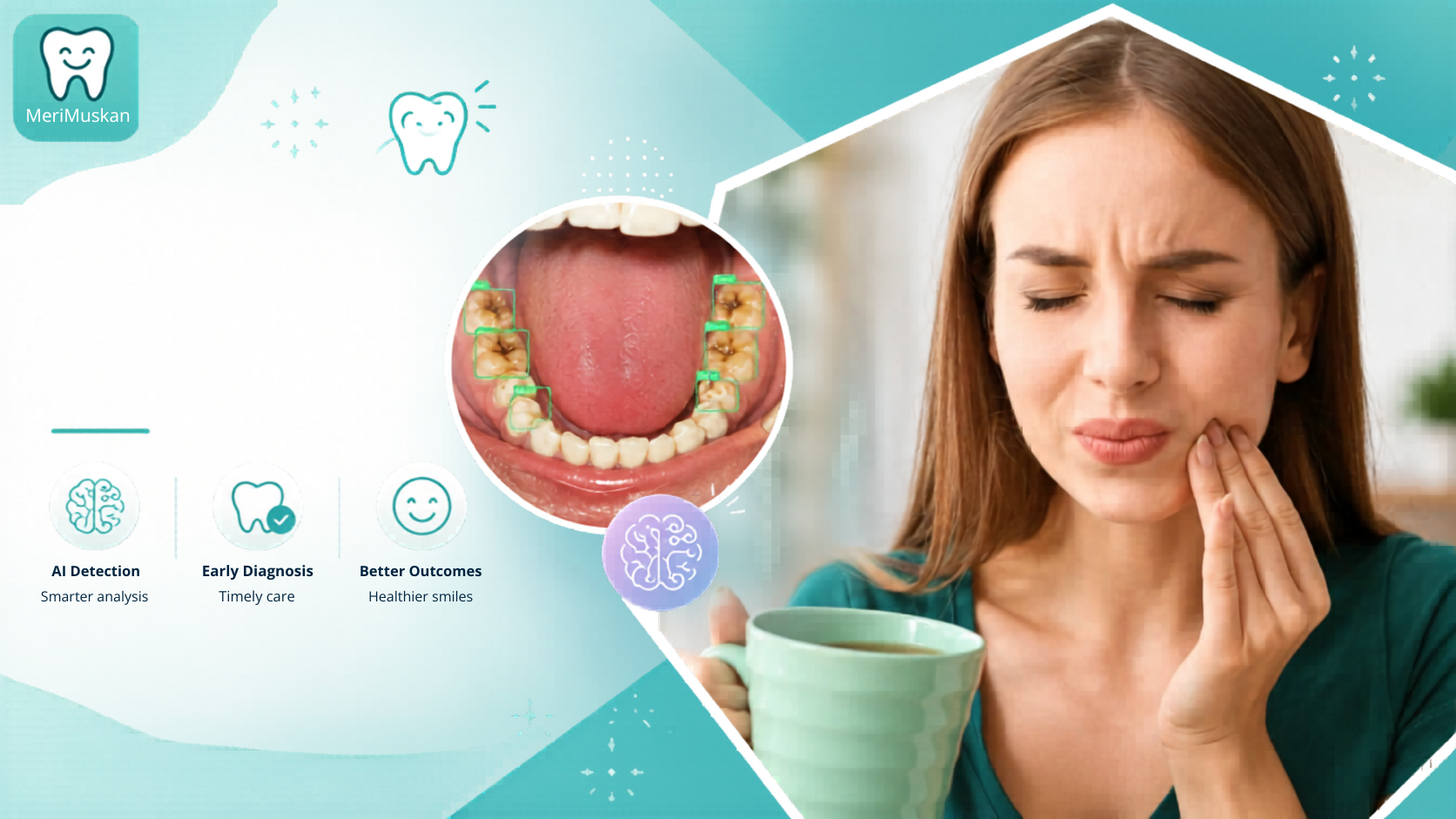
Early signs of dental problems you should never ignore
Imagine this.
You’re enjoying chai, scrolling your phone, and suddenly you feel a slight sensitivity in one tooth.
Not pain. Just a small twinge.
Not enough to ruin your chai. But enough to make you pause for a second.
You ignore it.
A few weeks later, it turns into a sharp “zing” when you drink something cold. You tell yourself:
“It will go away.”

A few months later, that small issue turns into a cavity… then a root canal… and possibly even a crown.
And suddenly, a minor inconvenience becomes a major dental expense.
This is the reality for thousands of people, every single day.
Why dental problems become expensive so quickly
Dental disease rarely starts with pain.
It begins quietly… with small cavities, early gum inflammation, or minor enamel changes that are easy to ignore.
By the time symptoms appear, the condition has often progressed significantly.
In simple terms:
Small cavity → simple filling
If untreated → deeper decay
Advanced decay → root canal treatment
Structural weakness → crown
Severe damage → extraction and implant
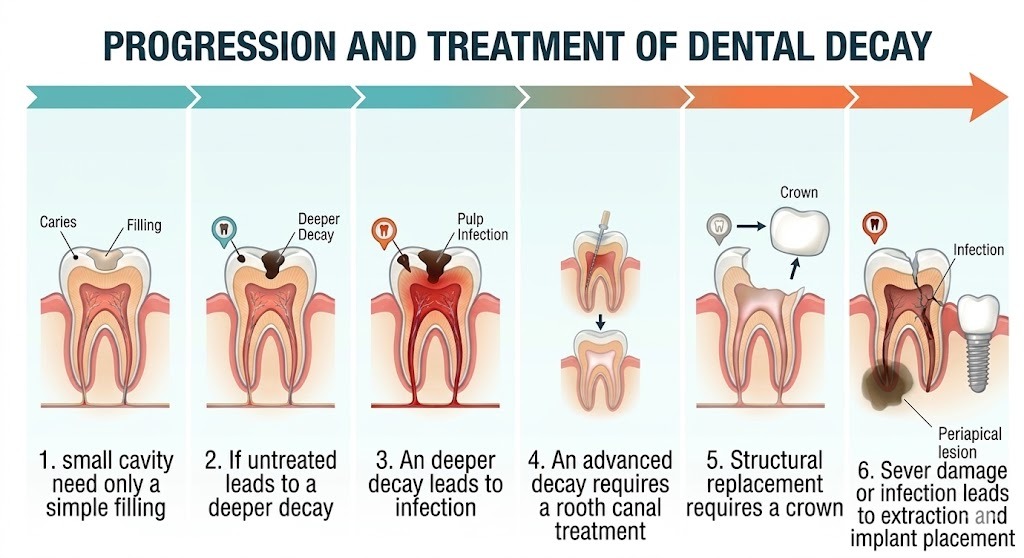
Not every case follows this exact path, but the pattern is clear, delayed care leads to more complex and expensive treatment.
Early detection isn’t just about saving your teeth, it’s about saving time, discomfort, and money.
The hidden truth: most dental issues start silently
Here’s something many people don’t realize:
By the time you feel pain, the problem is often already advanced.
Early-stage dental problems, such as cavities or gum disease, may not cause noticeable symptoms.
They often appear as subtle changes in:
Dental X-rays
Intraoral photographs
Gum contours
Tooth surface texture
Early demineralization (white spot lesions)
These early signs are easy to miss without regular dental checkups.
How AI is helping in early detection of dental problems
Artificial Intelligence (AI) is not a replacement for dentists, but it can support early detection.
AI-assisted dental tools can analyze dental images (such as intraoral photos or radiographs) and highlight areas that may require further evaluation, including:
early signs of tooth decay
gum inflammation
changes in bone levels
patterns that may indicate underlying issues
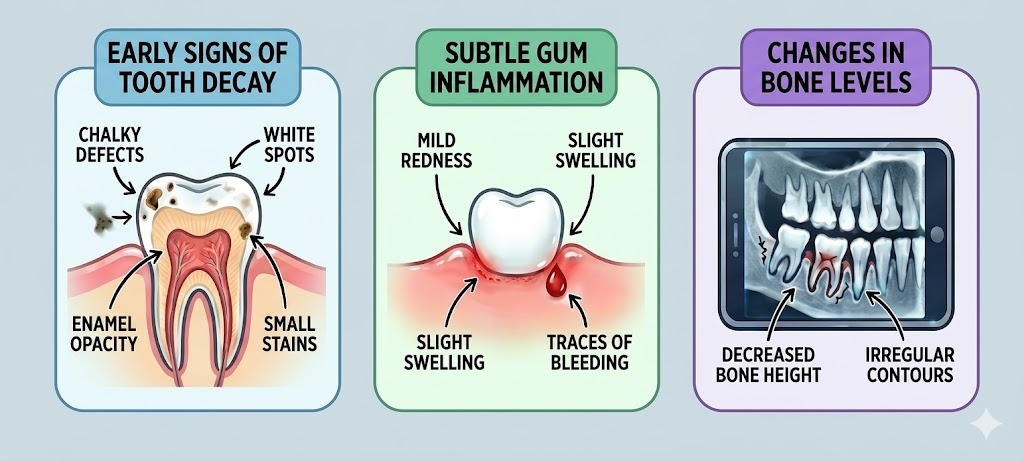
When detected early, many of these conditions can be managed with preventive or minimally invasive treatment.
Why timing makes all the difference
Let’s consider two scenarios: Patient A and B, both have mild sensitivity to cold food.
Patient A: “I’ll wait.”
ignores early sensitivity
problem progresses
requires root canal and crown
higher cost and discomfort
Patient B: “Let’s check early.”
gets early screening
small issue detected
simple treatment
minimal cost and no major procedures
Both started at the same point.
The difference was timing.
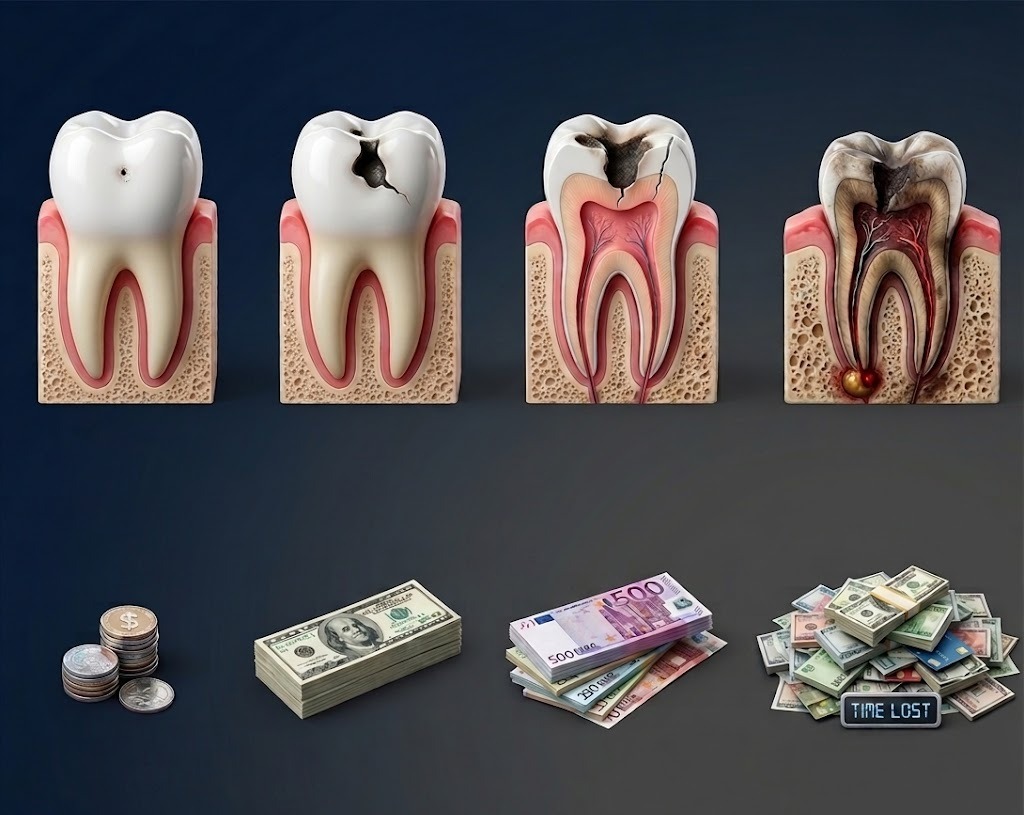
AI is shifting dentistry from reactive to preventive
Traditionally, many people visit the dentist only when something hurts.
But modern dentistry is moving toward prevention and AI is accelerating this shift.
AI helps:
identify early warning signs
support dentists in image analysis
highlight areas that may need attention
improve patient understanding
Why this matters for patients
One of the biggest challenges in dentistry is communication.
A dentist may say, “You have early caries,” but the patient may not fully understand the urgency.
When AI highlights the area directly on the image, the patient can see it.
And when patients see it, they act faster.
How MeriMuskan supports early detection
Platforms like MeriMuskan are built to make early detection easier.
Using AI-assisted dental screening, you can:
upload dental images
receive a preliminary assessment
understand whether professional care is needed
It’s a simple first step from uncertainty to clarity.
A quick reality check
AI is not a substitute for a dentist.
It cannot perform procedures or replace clinical judgment.
What it can do is help you identify problems early and act on time.
Take the first step
If you’ve been delaying a dental check, don’t wait for the problem to grow.
Try MeriMuskan and take a simple step toward protecting your oral health.
Because the best dental treatment is the one you never need.