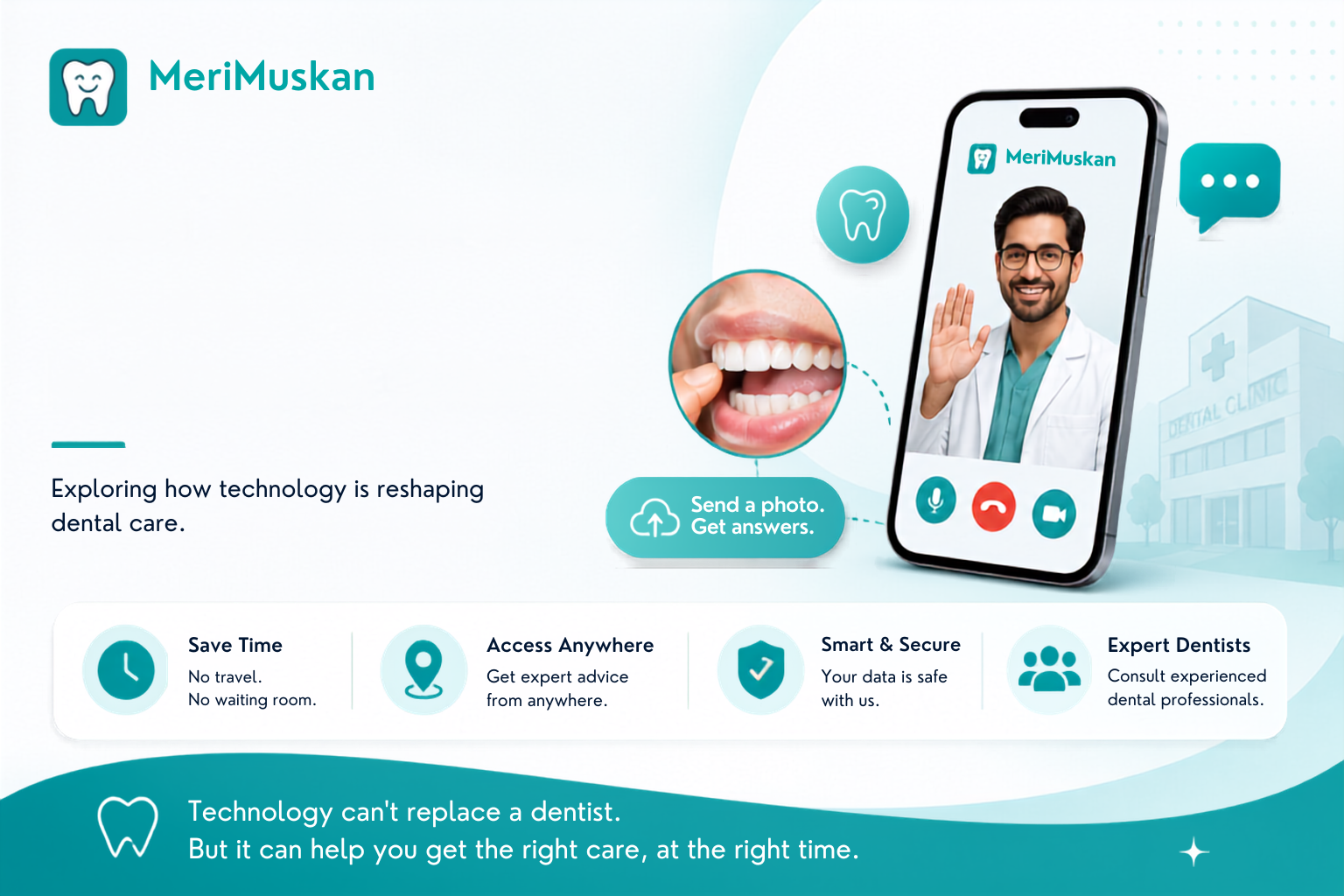
Let’s start with a simple situation…
You have a question about your teeth.
But the clinic is far. The wait is long. And you're not even sure if the problem is serious enough to visit a dentist?
So, you do what most people do, you wait.
Now imagine this instead.
You take a photo. Send it to a dentist. Get a response.
No travel. No waiting room.
This is teledentistry.
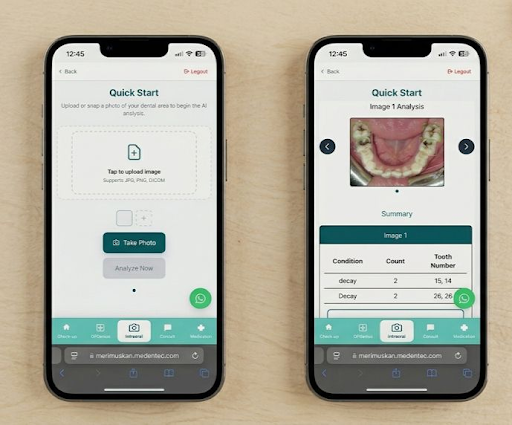
Teledentistry has been quietly changing how people access dental care. A photo upload, a video call, and you have answers without leaving your home.
But it raises a bigger question:
Can teledentistry actually replace visiting a dentist in person?
Let’s think about this through.
What even is teledentistry?
Teledentistry means receiving dental advice, assessments, or consultations remotely through your phone or laptop.
It can look like:
sending photos of a tooth that's bothering you
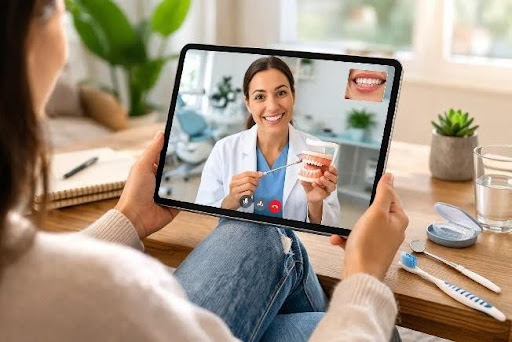
a video call with a dentist to discuss symptoms
getting a preliminary assessment before booking an in-person visit
receiving post-treatment follow-up without visiting the dental clinic again
consulting your dentist even when you are overseas
It's not a new idea, but with advancements, better cameras, faster internet, and smarter AI tools have made teldentistry much more practical in recent years.
Why it feels like teledentistry could replace clinics
At first glance, it really does seem like it can.
Teledentistry is fast, convenient, and increasingly accessible.
You can:
get answers quickly
avoid unnecessary visits
speak to a dentist from anywhere
With all this convenience, it’s easy to think:
“Do I even need to visit a clinic anymore?”
But where does that idea fall short?
This is where reality steps in.
No matter how advanced technology becomes, there are things teledentistry simply cannot do:
It cannot physically examine your mouth
It cannot take an X-ray or probe a cavity
It cannot perform scaling, extraction, filling, or any other procedure
It cannot replace a dentist's clinical judgement based on direct examination
And most importantly, it cannot fully replace clinical judgment based on direct examination.
So, what is the truth?
Teledentistry is not a replacement.
It’s a support system.
Where teledentistry actually shines
Let's be honest about where it actually helps.
1. Deciding if something is urgent
You notice swelling, a broken tooth, or sensitivity that won't go away.
Is it serious?
A quick remote consultation can help you figure that out quickly, without panic or an unnecessary trip.
2. Early screening
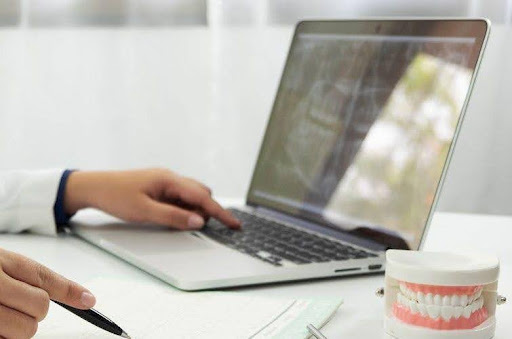
AI-assisted tools can help analyse dental images and highlight areas that may need further evaluation such as early signs of decay or gum changes.
Catching something early, even remotely, means simpler and cheaper treatment.
You can try OPGenius AI for OPGs or MeriMuskan for intraoral pictures.
3. Access for people in underserved areas
In many parts of Pakistan, dental care isn’t easily accessible.
Teledentistry doesn’t solve everything, but it provides:
a starting point
guidance
direction
Before problems become severe.
4. Follow-ups and check-ins
Not every post-treatment visit requires a clinic.
Sometimes, a photo and a quick consultation are enough to confirm healing.
5. Getting a consultation from your dentist even when you are overseas
Many people feel more comfortable continuing care with a dentist they already trust. If you are travelling or living abroad, teledentistry allows you to stay connected with your dentist, even if they are in another country.
The real role of teledentistry
Think of it like this,
The clinic is where treatment happens. Teledentistry is where decisions begin.
It helps you:
act earlier
avoid unnecessary delays
make informed choices
So… can teledentistry replace clinics?
No.
But it can make dental care faster, more accessible and less intimidating...
And sometimes, that first step is the hardest one to take.
Take the first step
If you've been ignoring a dental concern because the clinic feels too far, too expensive, or you’re just not sure if it’s serious, start small.
Upload a photo. Ask the question.
Let technology do what it's actually good at.
Help you act, before the problem gets worse.