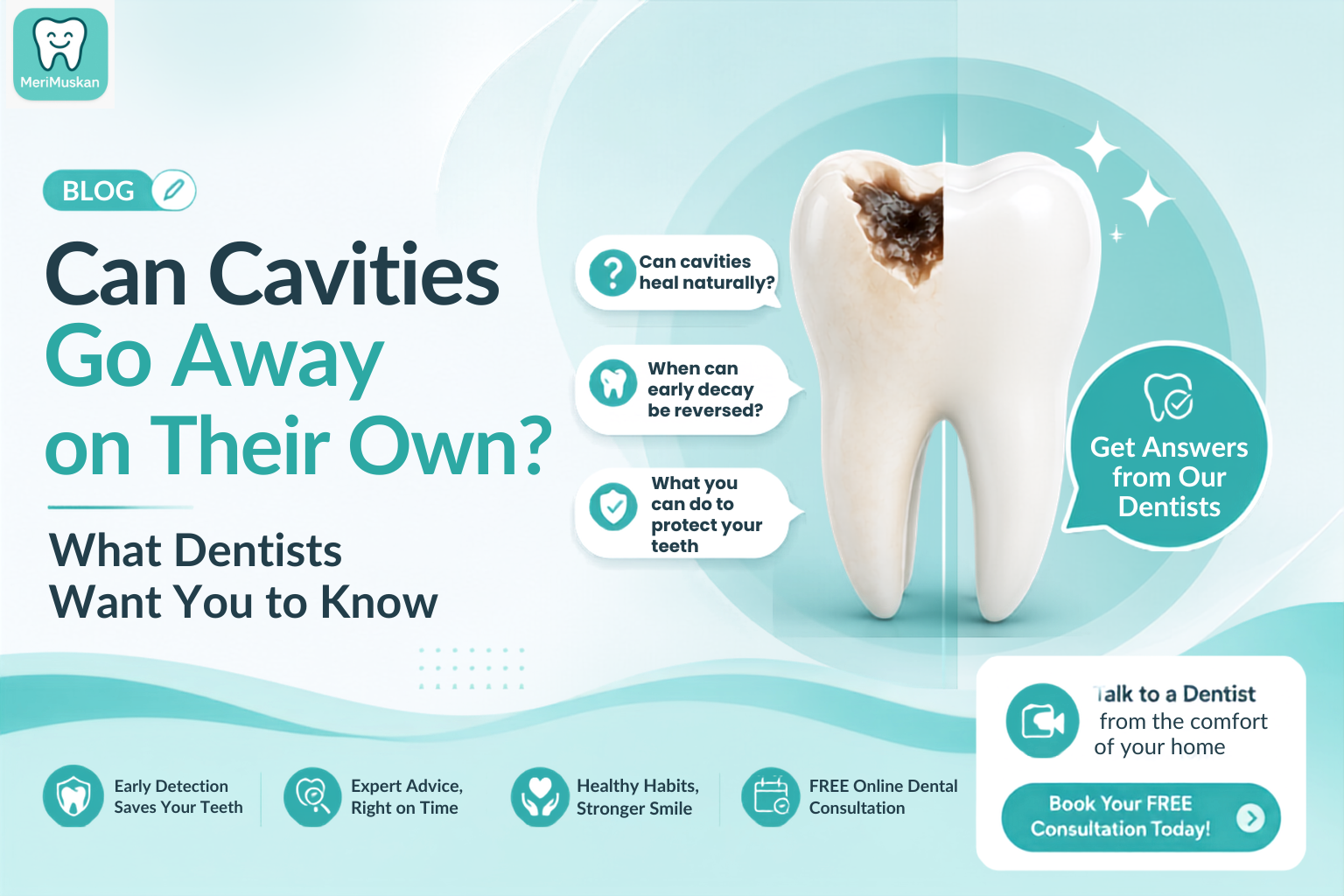
You notice a tiny dark spot on your tooth.
It doesn't hurt.
So you think:
“Maybe it will go away on its own?”
Or perhaps you've been telling yourself:
“It's just a small cavity. I'll get it checked later.”
You're not alone. One of the most common questions dentists hear is:
Can cavities go away on their own?
The short answer: Usually, no.
First, what exactly is a cavity?
A cavity, also called tooth decay or dental caries, happens when acids produced by bacteria in dental plaque gradually damage the tooth.
It usually doesn't happen overnight.
Think of tooth decay as a process:
Plaque → Acid attacks → Mineral loss → Enamel damage → Cavity
And this is where things get interesting.
Can early tooth decay be reversed?
Sometimes, yes.
If the damage is still at the very early stage, before an actual hole has formed in the tooth, the process may be stopped or even reversed through remineralization.
Fluoride, good oral hygiene, and reducing frequent sugar and acidic food intake can help strengthen weakened enamel.
You may have seen these early changes as white spots on your teeth.
But once an actual cavity or hole has formed...
It won't grow back naturally.
Tooth enamel cannot regenerate itself once it has been physically destroyed.
That's when professional dental treatment may be necessary.
“But my cavity doesn't hurt!”
This is where many people get caught out.
No pain doesn't necessarily mean no problem.
Early cavities may have no symptoms at all.
As decay gets deeper, you may eventually notice:
Sensitivity to hot or cold
Pain when eating sweets
Food getting stuck in one area
Toothache
A visible hole or dark spot
Pain when biting
By the time a cavity starts hurting, the decay may already be more advanced.
What makes cavities worse?
Some everyday habits can increase your risk of tooth decay, especially:
Frequent sugary snacks and drinks
Sugary or acidic beverages
Inadequate brushing and flossing
Going to bed without cleaning your teeth
Not attending regular dental check-ups
Reduced saliva or dry mouth
So, what should you do if you think you have a cavity?
Ask yourself:
Have you noticed a dark spot? Does a tooth feel sensitive? Does food keep getting stuck in one place? Have you been avoiding one side while chewing?
If yes, don't wait for the tooth to start hurting.
A dentist can examine the tooth and, when needed, use dental X-rays to determine how deep the decay is.
The earlier you catch tooth decay, the more options you may have to manage it conservatively.
A tiny problem today can become a much bigger and more expensive dental problem later.
Not sure whether that spot on your tooth is a cavity?
You don't have to Google your symptoms and guess.
MeriMuskan offers FREE online dental consultations with experienced dentists.
Simply share your dental concern and relevant photos, and our dentists can help you understand what may be going on and whether you should seek an in-person examination.